Account data needed a dependable home
Company and member information had to be easier to inspect and update without switching tools.
Dialogue · B2B product discovery
A research-led concept that reorganized company profiles, billing, subscriptions, and support tasks into a focused experience for account teams.
Project snapshot
Dialogue’s existing portal served both internal account managers and customer-side administrators. The discovery explored how to separate internal operational work and create a focused portal around the information each group needed.
The challenge
Account managers relied on the existing portal alongside Slack bots, support-request templates, and help from technical teams. The fragmented toolset made routine tasks harder to locate and complete consistently.
How might we create a dedicated account-management experience that reflects real workflows while separating internal operations from customer self-service?
Research synthesis
I organized interview findings into common themes and translated them into must-have capabilities for a future tool.
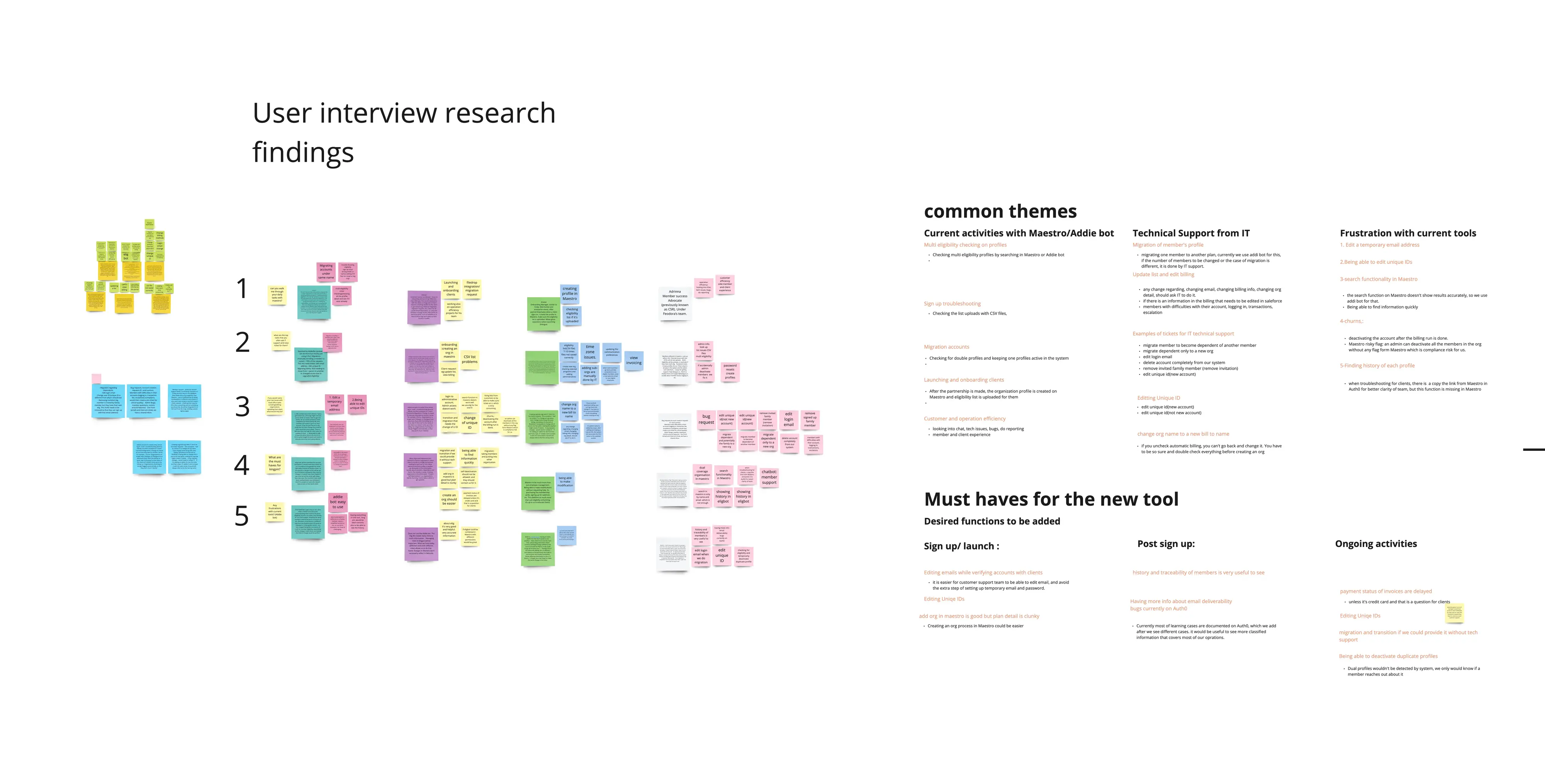
Company and member information had to be easier to inspect and update without switching tools.
Slack bots and IT requests were not edge cases; they represented tasks the portal did not adequately support.
A clearer boundary was needed between operational administration and customer self-service.
Current-state ecosystem
Before proposing screens, I documented the external tools and support channels account managers used to finish their jobs.
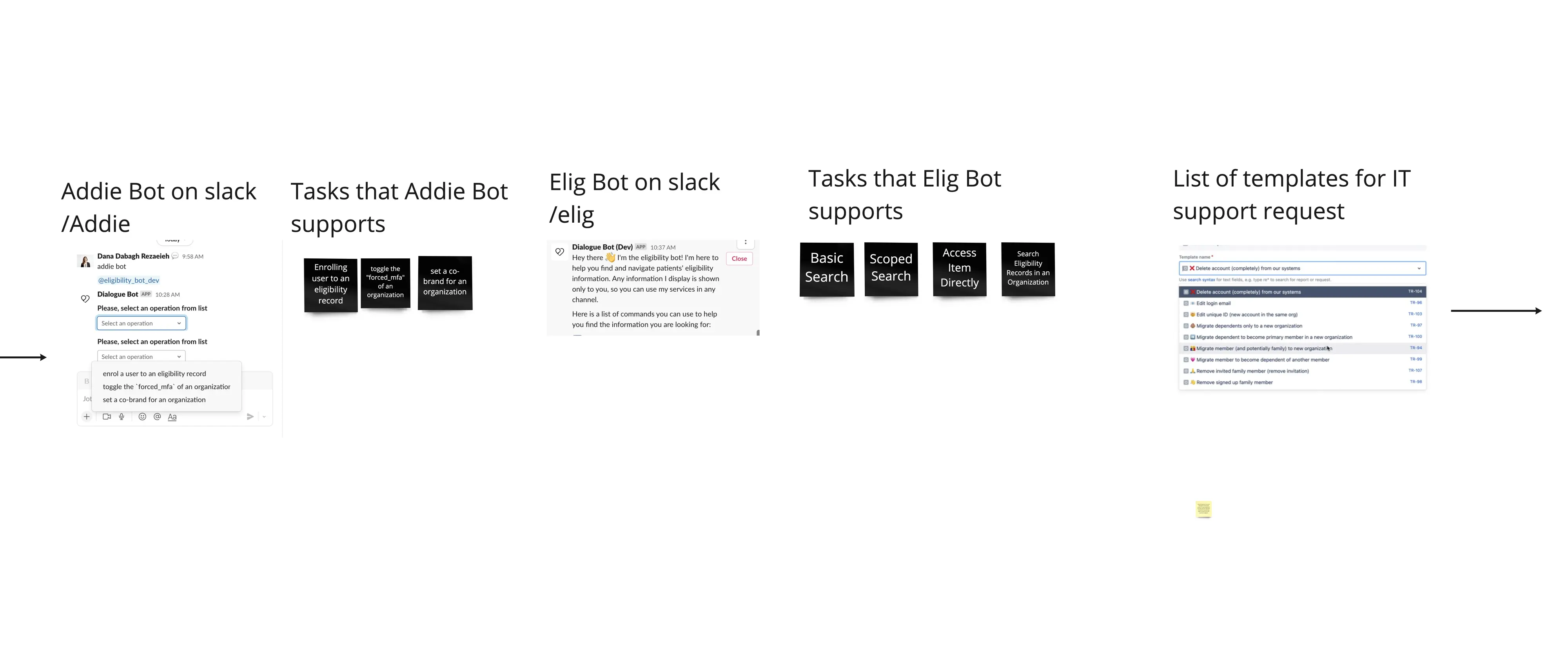
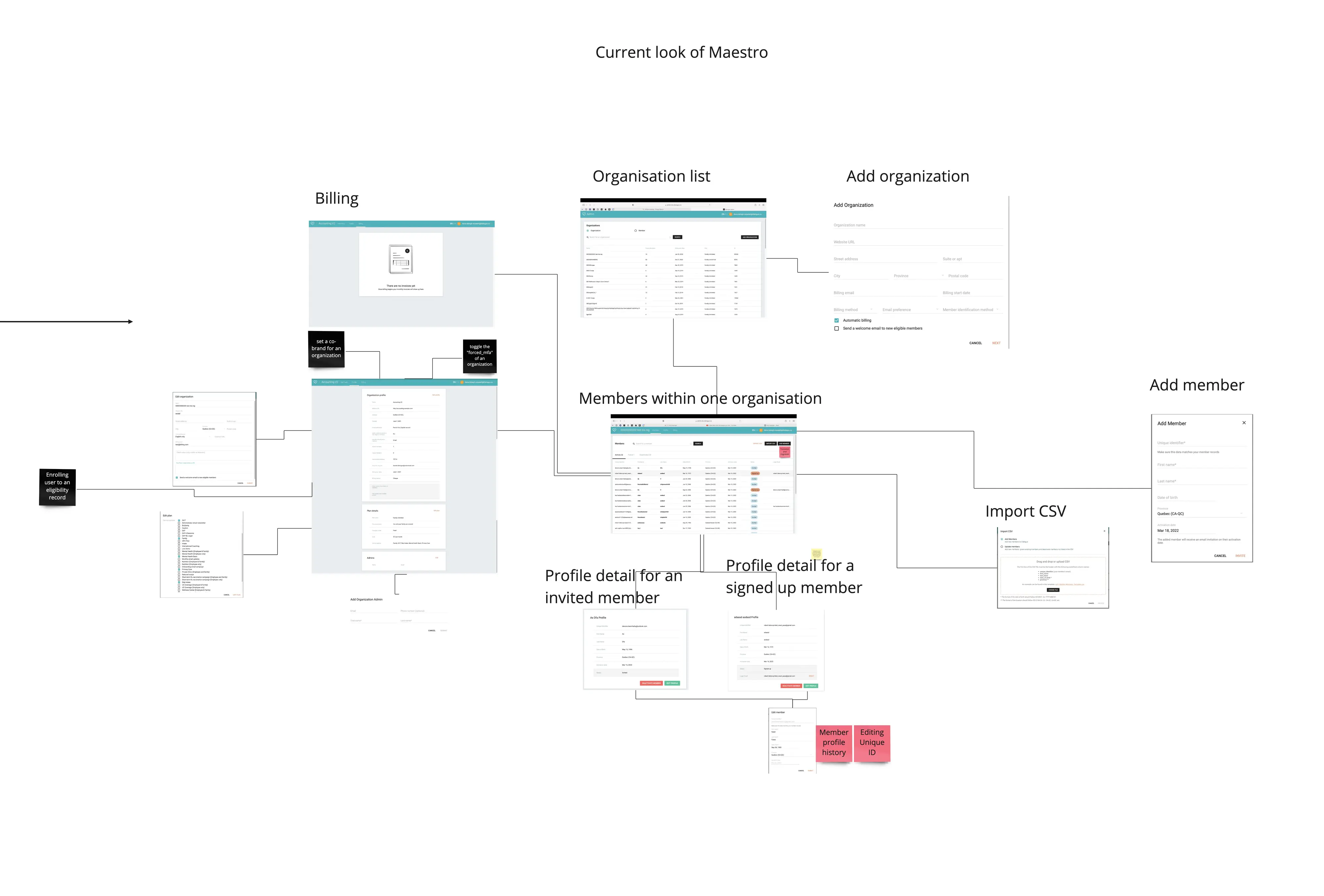
Existing product
I mapped the current interface and its connections across billing, organizations, member records, imports, and profile details.
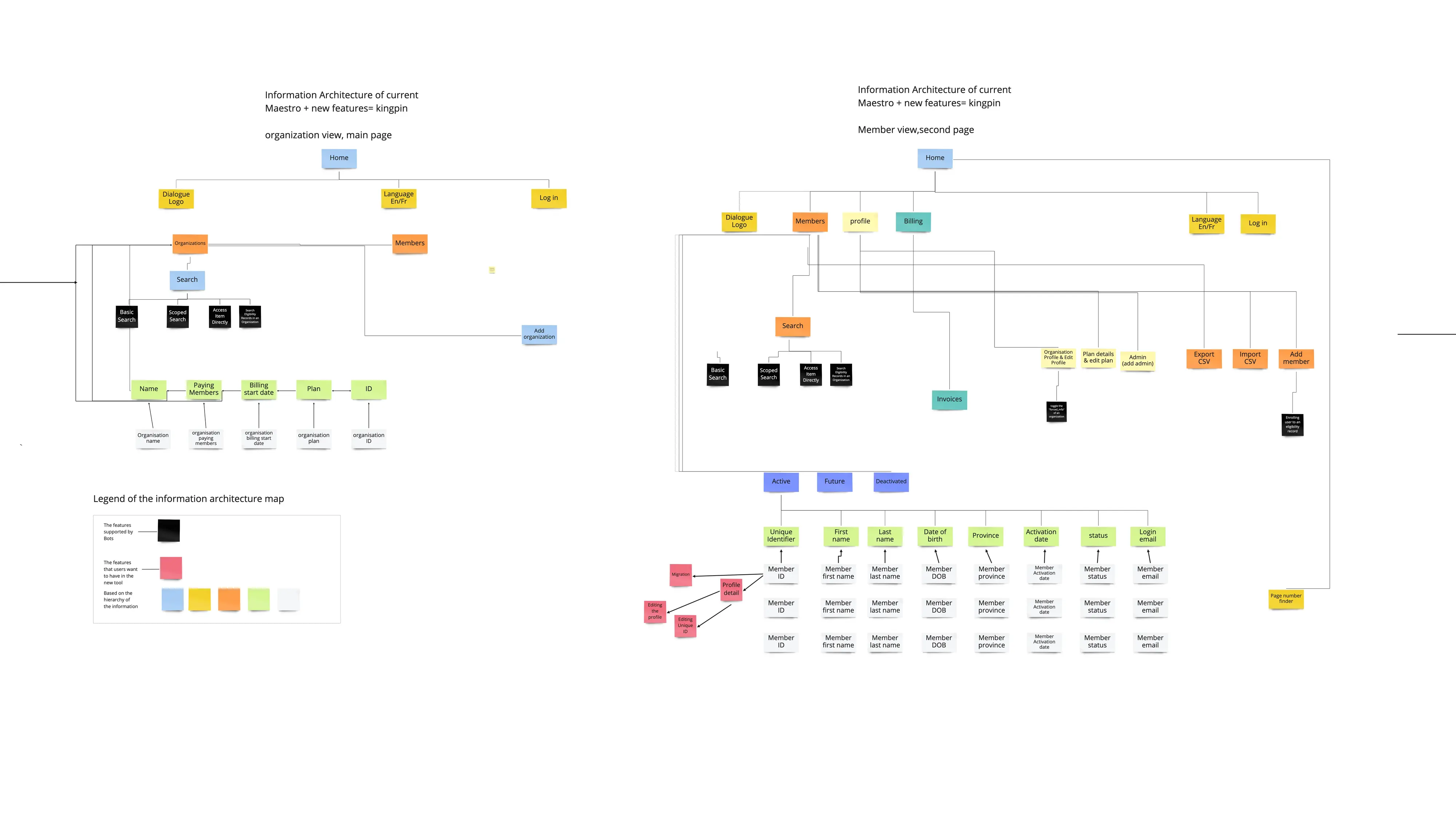
Information architecture
The proposed hierarchy separated customer-facing administration from internal operational tools while preserving the relationships among organizations, members, subscriptions, and billing.
Design progression
Low-fidelity wireframes tested the structure of organization lists, profiles, billing information, and editing workflows before visual refinement.
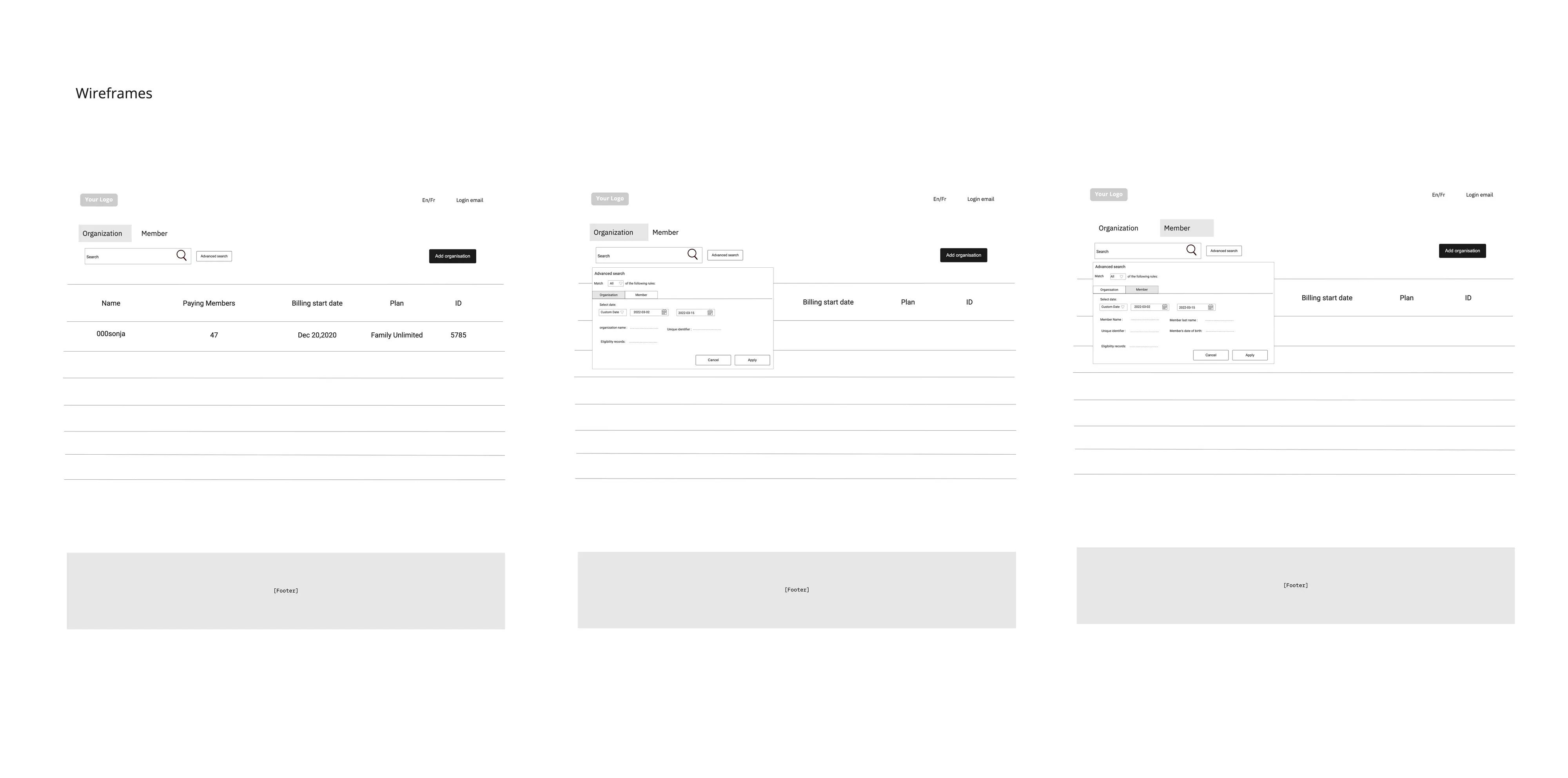
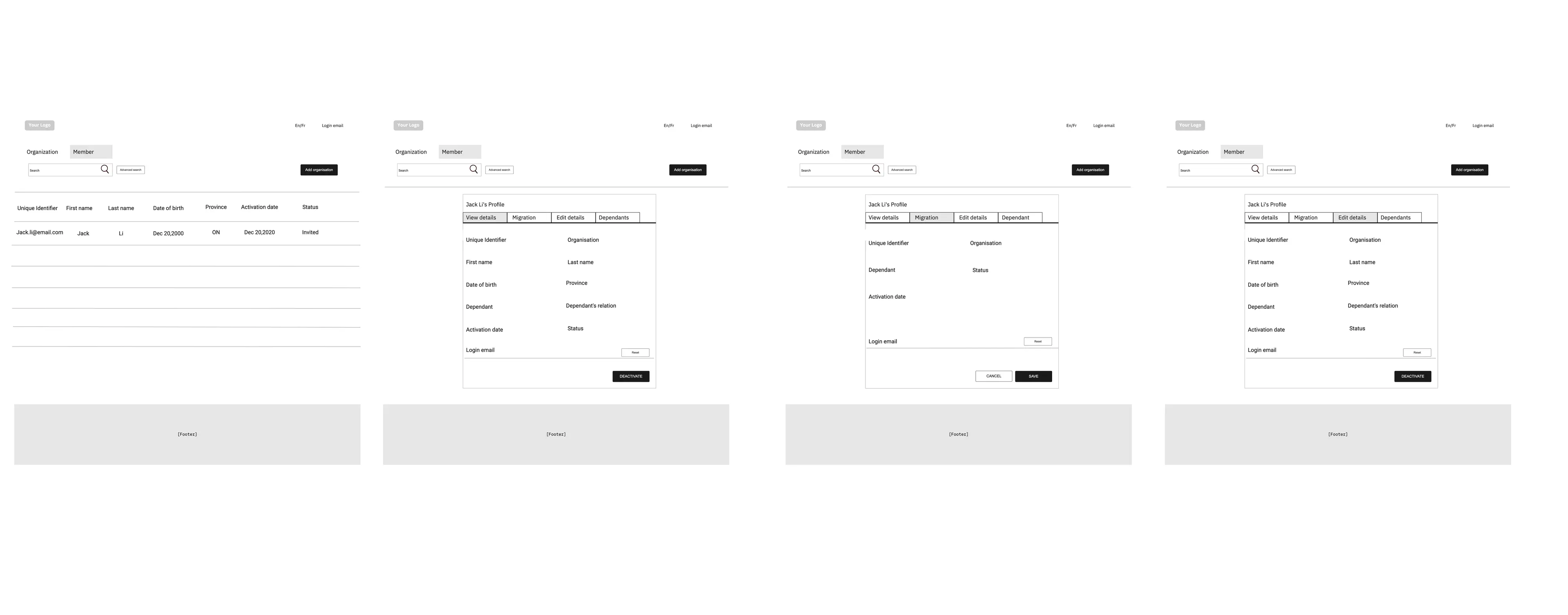
Prototype evolution
The first prototype made the information architecture tangible. A later concept expanded the feature direction after product-planning conversations.
Translating the proposed hierarchy into an interactive product direction.
Extending the experience after product-manager review and feature brainstorming.
Proposed product model
View and maintain company-level information in one dependable location.
Inspect, add, and update member records within the appropriate organization.
Bring financial and plan information into the same account context.
Reduce reliance on scattered tools by supporting recurring operational needs directly.
Outcome
The project produced a synthesized understanding of account-manager needs, maps of the current ecosystem and portal, a proposed information architecture, low-fidelity workflows, and two prototype stages.
Because the available evidence documents discovery and concept development—not a production release—this case study focuses on the quality of the research-to-design reasoning rather than claiming launch metrics.
Reflection
Mapping only the existing portal would have missed much of the real job. Slack bots, IT requests, and manual support showed where the product boundary had failed to match users’ responsibilities.
The most valuable design move was therefore not a screen—it was expanding the research frame before deciding what belonged in the new portal.
Selected work
Return to the portfolio to review released insurance experiences and other product-design work.
Return to selected work